350 Milwaukee
  • Home
  • 350 MKE ▼
    • Meeting Archive
    • Report from Europe
    • What you can do now
    • Change Your Bank
    • Get involved!
    • Why 350?
    • 350 Milwaukee in the News
    • 350.org National
    • Clean Power Coalition - SE WI
  • Actions ▼
    • 2023
    • 2022
    • March Forth To Earth Day
    • StopThe MoneyPipeline
    • Pipelines
    • Dec. 6 2019 Bank Sit-in & Climate Rally
    • Sep. 20 Global Climate Strike
    • Resolution on Climate & Equity
    • Stand for a Livable Climate - Solar Tax
    • 2019 WEC Annual Meeting
    • Tammy Baldwin GND Petition
    • We Energies Variance Hearing
    • Holiday Caroling at We Energies
    • National 350.org Letter
    • Foxconn Solar Petition
  • More News ▼
    • Climate On-line
    • Financing Climate
    • Ideas
    • Action
    • Impact
    • WEC (We Energies)
    • Video & Podcasts
  • 350.org

Climate Perspectives From Europe

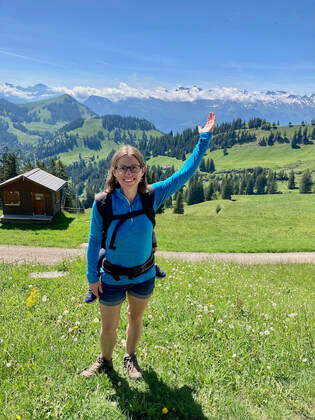
Hi! I’m Michelle.

I’m an engineer, a mother of 3, and a member of 350MKE. Since I’m very passionate about protecting our environment and climate, I like to participate in environmental orgs like 350. I’m originally from Milwaukee, but now I live in Switzerland. With climate change, it’s good to have a global perspective, so to provide a European viewpoint, I’ll be sharing “Climate Perspectives from Europe”. I hope you find them interesting.

Please send me your thoughts and questions. You can reach me on Instagram or by email. I look forward to connecting virtually or in-person when I’m in Milwaukee visiting family.
Picture
Public transportation & City design: october 2023.  (MORE...)

​Hi Everyone,

It’s been a while since I’ve checked in. So I hope you are doing well.


After a summer of wildfire smoke, droughts, and heat waves, now is a good time to focus on climate solutions.
 
As a Milwaukee-native now living in Switzerland, I’ve had a chance to experience some climate solutions that are just budding in Wisconsin. Walkable cities, municipal compost, renewable energy, etc. These examples show that climate solutions ARE possible and often have additional benefits too. Let’s take a look starting with public transportation and walkable cities:
​


​Imagine people of all ages and classes riding the bus together. Commuters. Families. The elderly. Everyone. The buses come so often that you don’t need to check the schedule. You buy tickets quickly on your phone. When you get to your bus stop, it’s a short walk and then you arrive at your destination.

 
That’s public transportation in Switzerland! Pairing that with sidewalks and footpaths under busy intersections means that walking or taking the bus is often preferable to driving! ​
Picture
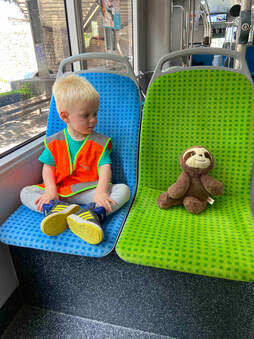
Here’s a picture of my son riding the bus in Switzerland with “Slothie”
Picture
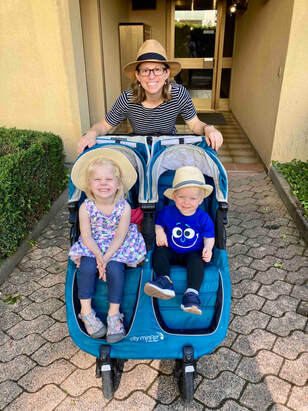
Me with my kids in the double stroller. We love taking the stroller to walk to errands, daycare, library, etc.
What does this mean for me and my family? It means we walk to the grocery store, preschool, and most errands. My husband walks or takes the bus to work. Like many Swiss families, we only have one car which is primarily for weekend outings. Also, it doesn’t matter as much if gas is $7/gallon because we use WAY less. We have a great life, but we are not car dependent. This freedom is wonderful!
 
Walkability and public transportation are climate solutions too. Less pollution. Fewer carbon emissions. More active people. But, I know it’s not easy to implement these things into regions that have been designed around cars. Every pedestrian walkway that you support and every lane expansion that you protest helps move the needle. There are already good efforts to expand walkability and public transportation in Milwaukee, like the Bus Rapid Transit (BRT) route that began running in June and expansion plans for the HOP. ​

Now, let’s work together to keep the momentum going! Can you use the bus, BRT, or HOP to replace any of your car trips? If we work together, we can build a stronger community with cleaner air for everyone in Milwaukee!


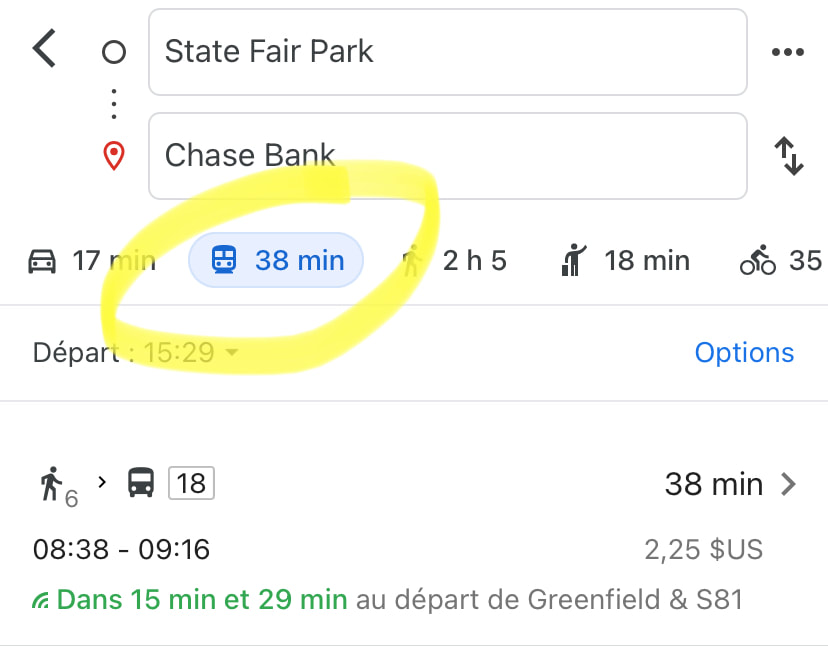
​To explore public transportation options, try this 
button in Google Maps. This screen shot shows transit from State Fair to the downtown Chase Bank location for our Friday protests. Think of how much parking frustration you’d avoid!
Picture
Picture
I welcome your thoughts and questions:
Email: [email protected]
​Instagram: @Environmentalist_Mama


How Does Milwaukee Compare?
By Greg

While far behind most of Europe today, Milwaukee has begun making public transportation a priority.  But good public transportation is not new for Milwaukee.  Horse-drawn streetcars appeared on Milwaukee’s streets in the 1860’s with electric streetcars arriving in the 1890s.  By 1920, after acquisitions and bankruptcies, The Milwaukee Electric Railway & Light Company (TMER&L Co.) emerged operating 180 miles of track within Milwaukee City limits.  A subsidiary ran interurban commuter lines to Kenosha, Sheboygan, Watertown, Burlington, and East Troy.
 
In 1938, under federal pressure, TMER&L Co. divided its electric power and electric streetcar assets which, in the process, formed Wisconsin Electric Power & Light Co. that eventually morphed into today’s WEC.  The division was mostly on paper and in 1947 the FTC’s demand for divestment led to Milwaukee’s streetcar lines running for the last time in the spring of 1958.
 
From the late 1950s Milwaukee’s public transportation mostly consisted of buses with service subject to ownership (private until 1975) and budget constraints.

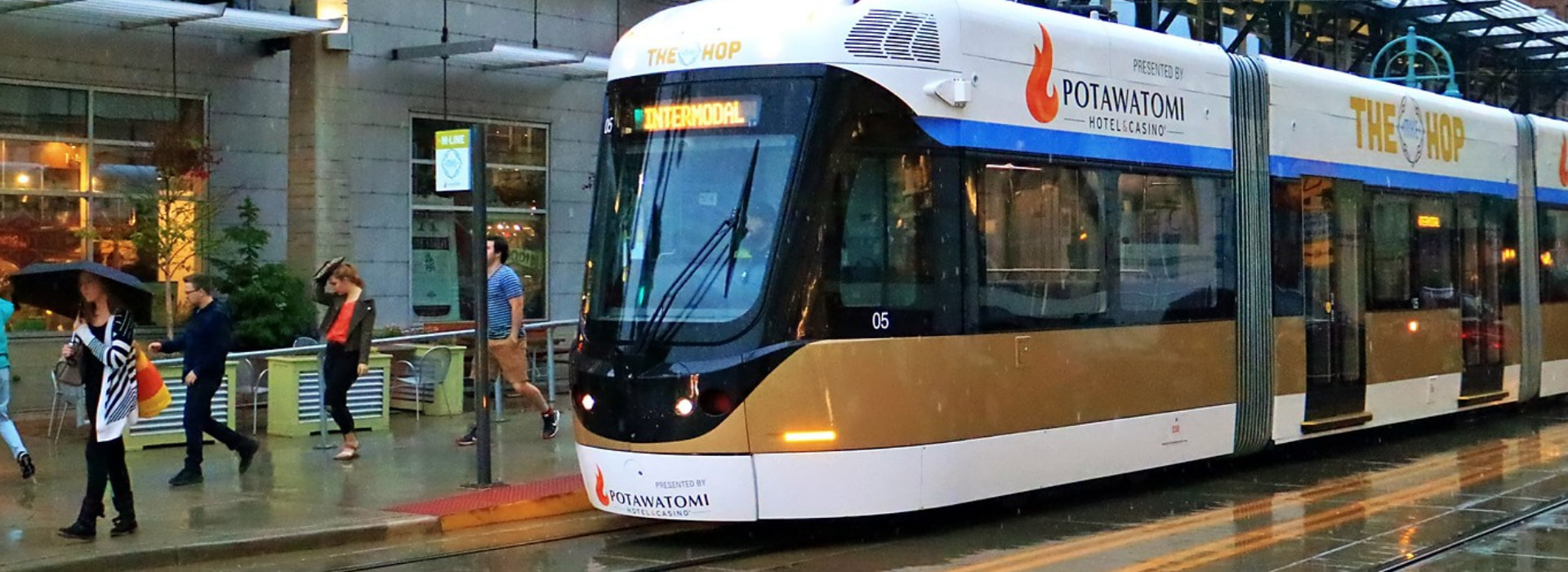
In 2015 plans to build an electric streetcar system were approved by the Milwaukee Common Council and in November 2018 The Hop began operations as Milwaukee’s first electric streetcar in 60 years.  Beginning October 29, 2023, you can try the new L-Line route (1st expansion phase) on Sundays while station construction continues during the week. The Hop is FREE to ride!  Check out it’s route.
Picture
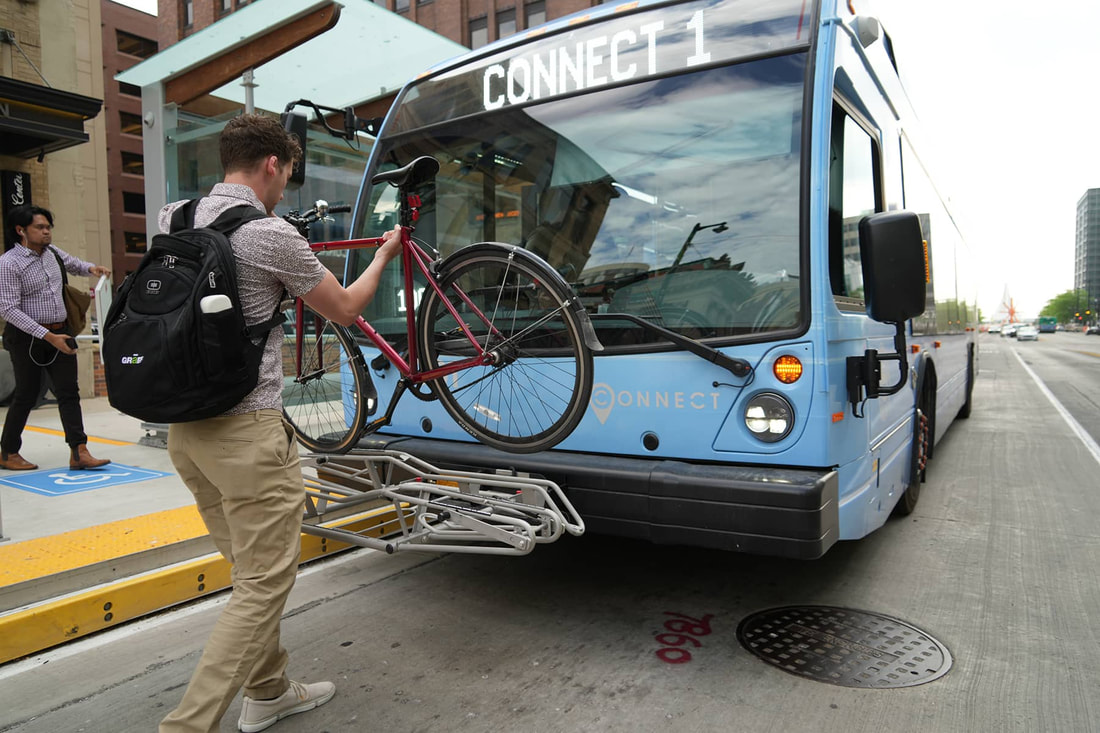
 In 2016 the East-West BRT (Bus Rapid Transit) Feasibility Study began.  The spring of 2023 saw the first buses (15 electric by early 2024) begin service on the East-West route that runs from near the lakefront and through the Milwaukee Regional Medical Center.  A North-South route along 27th St. is under development.  The CONNECT 1 BRT is FREE to ride until early 2024.
 
Jan and I have used The Hop a number of times.  It’s comfortable, modern and makes it very convenient to get to restaurants, shopping and Bastille Days without having to find parking close to your destination.  The streetcars are on 15 min. (peak) or 20 min. (off-peak) schedules.

​
Picture
We've also taken the BRT CONNECT 1 from the west Park-n-Ride to Chase Bank.  The route is mostly dedicated lanes that speed transit times.  Modern stations provide easy access.  The last stop is within easy walking distance of the lakefront, art museum, festival grounds or a transfer to The Hop.  The bus was nearly full through central downtown with people making use of the bike racks and wheelchair accommodation.
 
It’s only the beginning, give The Hop and CONNECT 1 a try!
 
The Hop
About the BRT
Ride the BRT
Brief history of Milwaukee Transportation
The Milwaukee Electric Railway and Light Company (TMER&L)

war in ukraine & eneregy crisis: december 2022.  (MORE...)

​Hello! One of the big topics for environmental AND current events is the war in Ukraine and the energy crisis. Here is my real-life perspective from Europe to go along with the headlines that you have probably seen.
Picture
Living in Europe during Russia’s war in Ukraine is the closest I’ve ever been to war. The distance from my city in Switzerland to Kyiv, Ukraine is the same distance as Milwaukee to Salt Lake City. I used to walk past my apartment building’s nuclear bunker and roll my eyes thinking it was surely unnecessary. Now, I appreciate the Swiss attention to detail and emergency preparation even though it is very unlikely for the war (or nuclear fallout) to spread to Switzerland.
And it’s more than geographic proximity, but also social ties to people affected by the war. For example, our babysitter’s mother could hear bombing from her home. People in my husband’s company raised money to buy Ukrainian coworkers bullet-proof vests. And Polish coworkers were driving to the border every weekend to pick up refugees. Every war is horrible, and now I have a closer viewpoint than I would have had while living in Wisconsin.
Picture
About half of Swiss natural gas is supplied indirectly from Russia via distributors in other countries. Sanctions and politics with Russia have caused an energy crisis in Europe. What does that actually look like? We live in a modest apartment with radiator heating. Utility costs are split between all residents, so although we barely turn on our radiators we still pay a portion of the utility costs for the building. It makes sense because our unit benefits from the heat of our neighbors. With the energy crisis, we expect to pay 30-40% more for utilities this winter and beyond. Energy costs are so high that daycare rates went up.
As with rising energy costs in Wisconsin, the extra costs have a disproportionate affect on people depending on relative income. For us, we will budget accordingly and make it work, but I’d much rather pay for clean energy instead of ruining our Earth with fossil fuels while paying for Russia’s war in Ukraine.
​
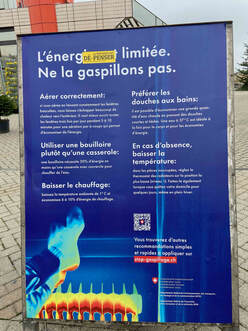
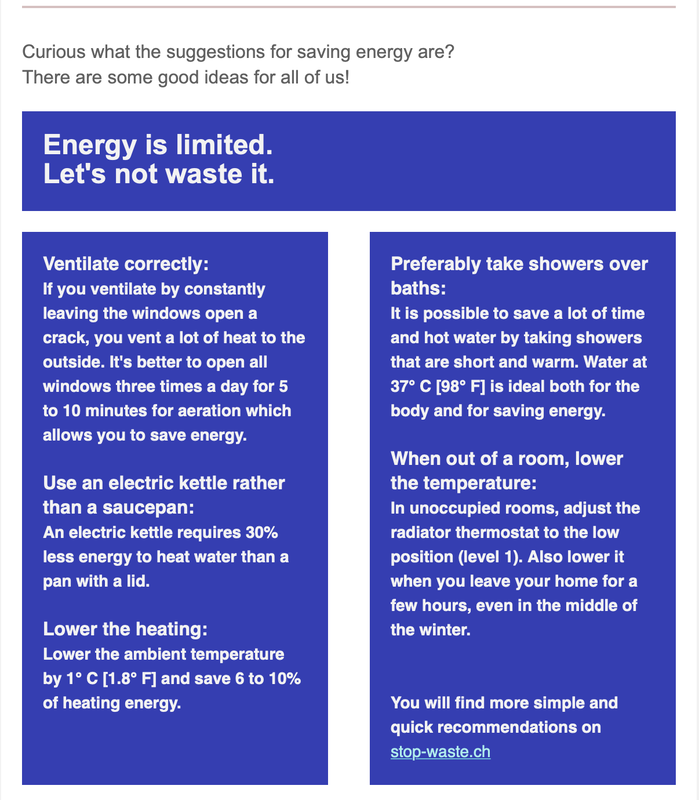
Thankfully there are also discussions about conserving energy and transitioning to renewables. Switzerland has a goal to cut natural gas usage by 15%. And we see a lot of media about the energy crisis and the need to save energy. For example, there are public reminders to use a lid on pots on the stove. The local newspaper has a section for “crise énergétique”. And, there are national discussions about a maximum indoor temperature of 68°F. There’s also a Swiss national plan which describes how fuel shortages would be handled via restrictions and quotas. A fuel shortage is unlikely, but again, the Swiss like to be prepared.
Relating the energy crisis to the climate crisis is easy. People, corporations, and countries need to urgently conserve energy and switch to renewables for the sake of a livable climate AND as a matter of human rights protection.

I want to emphasize that although I am experiencing this cost of energy crisis, it is nowhere near the tragic impacts felt by those directly involved in the war. So, this winter, let’s keep those people suffering from war (anywhere in the world) in our hearts and minds. And, let’s all do our part to save energy and ask corporations/municipalities to do the same.
Picture
Picture
I welcome your thoughts and questions:
Email: [email protected]
​Instagram: @Environmentalist_Mama
Picture
global climate strike from switzerland: September 2022.  (MORE...)

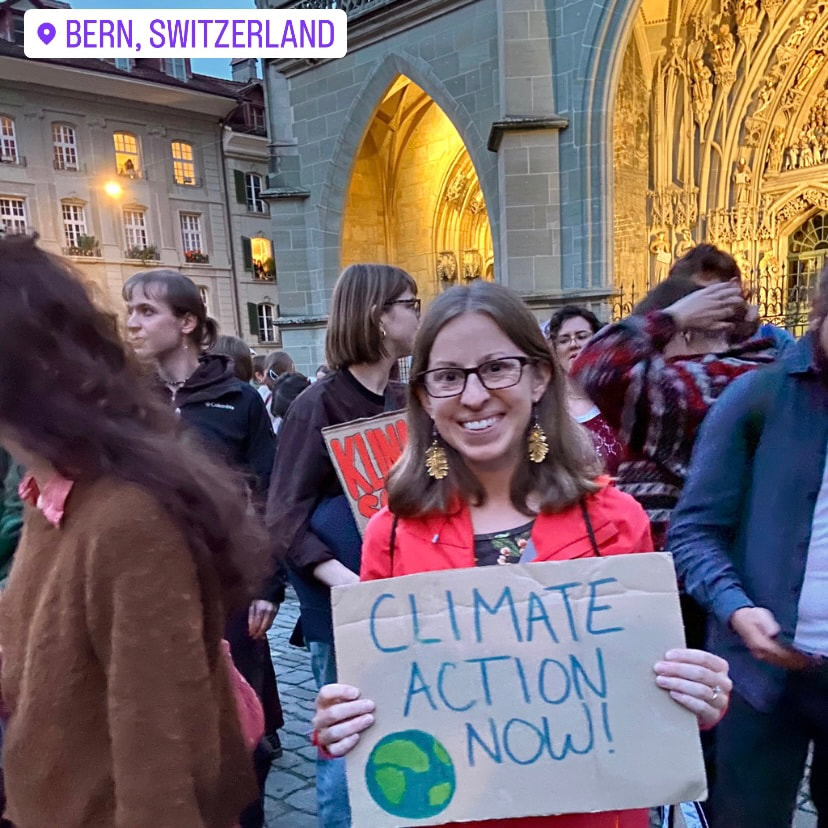
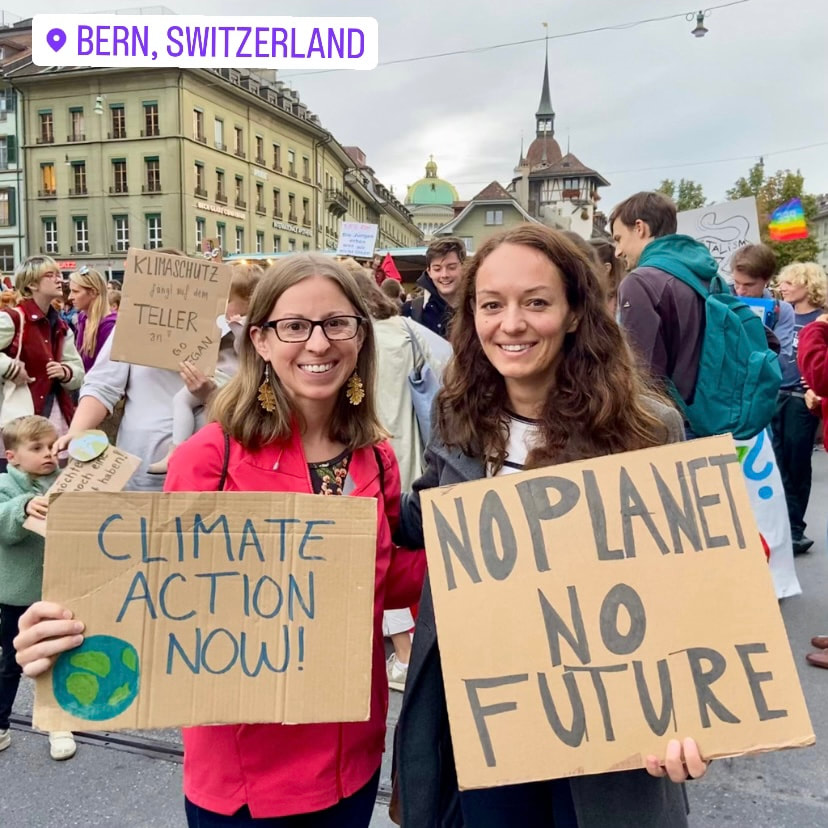
​“WE ARE UNSTOPPABLE! ANOTHER WORLD IS POSSIBLE!” That’s what we shouted in the streets of Bern, Switzerland. Like tens of thousands around the world, I went to a Global Climate Strike on September 23. And it was AWESOME.
 
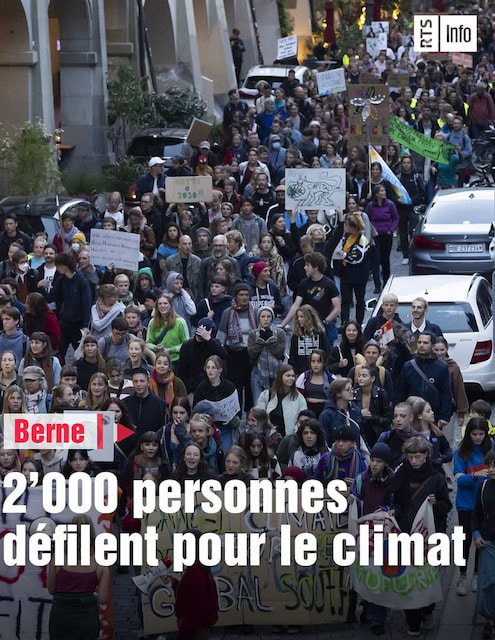
Switzerland is 1/4 the size of WI but has 50% more people. There were seven Swiss cities hosting events. I took the train 1.5 hours to join about 2,000 other protesters in Bern, a city with a metro population of 437,000 people. 
Picture
Picture
It started around 6pm with impassioned speeches. I loved the energy of the speakers, however everything was in German which I don’t understand. My friend told me the general topics (such as climate reparations). Then, the real fun began! We chanted in three languages, marched over cobblestone roads, past grand cathedrals, and interrupted the Friday-night crowd at downtown bistros. Some spectators continued their meals, others cheered and banged pans from apartment windows overhead. It was exhilarating and emotional.

​
I attended the event with one of my friends. Since it was far away and past bedtime, I left my kids at home with my husband. However, I promised that they can come to a protest when there’s one in our city. ​
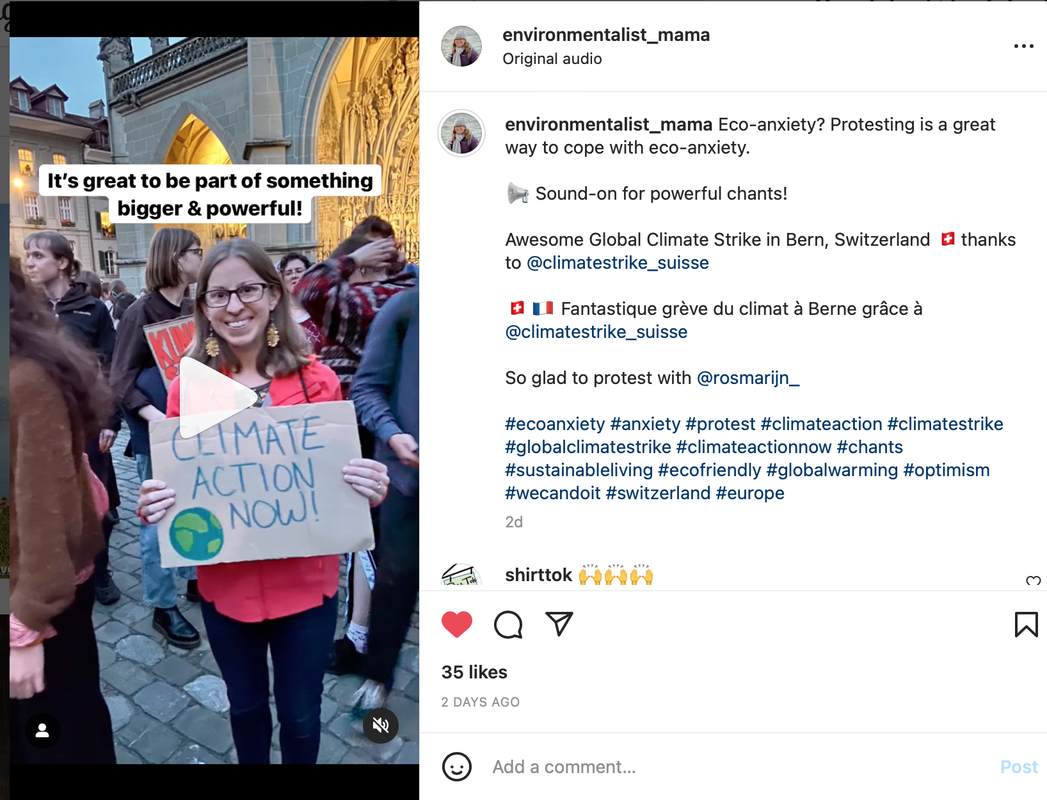
Many people from Milwaukee joined the Climate Strike in Chicago. Together, with others in 450+ cities globally, we demonstrated our concern and anger about the climate crisis and the need for climate justice. Also, for me personally, attending the Climate Strike really helped my eco-anxiety. It’s great to be part of something bigger and something powerful.
 
At the protest, there was anger, excitement, sadness, and optimism. Let’s take these passionate emotions into our daily lives, remembering that we HAVE the solutions! “WE ARE UNSTOPPABLE! ANOTHER WORLD IS POSSIBLE!”
Picture
Picture
I welcome your thoughts and questions:
Email: [email protected]
Instagram: @Environmentalist_Mama
Click to view the video on Michelle's Instagram
Picture
This summer's heat wave: September 2022.  (MORE...)
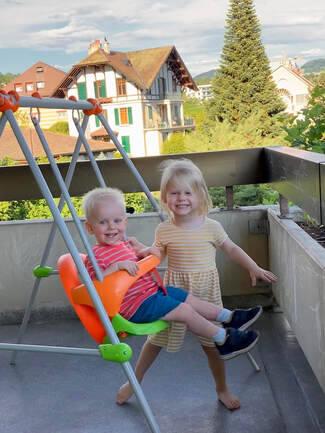
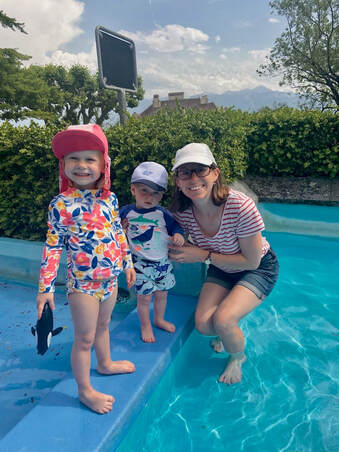
You may have seen headlines about the recent heat waves in Europe. But what is it actually like to live here? I live with my husband and 2 young kids in Switzerland. In our city, the average high temp in July is 78°F. This summer, we were in the upper 80s and 90s (up to 97°F) for weeks in a row. Only 10% of homes in Switzerland have AC, and our apartment is not one of them. So we were sweaty and uncomfortable. I worried about the safety of my children as they slept in the heat. We did what many people do when it’s hot and there’s no AC: We put blankets in the freezer, slept with ice packs, took cold showers before bed. And on the fun side, we went to the pool and beach many times, ate popsicles, and enjoyed fun moments with our kids.
Picture
So why don’t more people have AC over here? There are multiple reasons: in some areas, special permits are needed to install AC. Plus, our apartment, like many homes, has windows that swing open like doors. So it’s difficult to add window units.
Picture
During this heat wave, I learned about broken jet streams. Since the Arctic is warming up so much, the jet streams are altered compared to "normal" which then causes weather systems to linger over a given region (like Europe). What would have been a hot day here or there is now weeks of continuous hot days.
We are thankful that personally for us, the heat wave was not dangerous. In fact, even with the heat, we had a really good summer. Unfortunately, thousands of people in Europe lost their lives to the heat. And heat waves are tragic everywhere in the world. India, United States, North Africa, the Middle East, and China all had extreme heat this year. 
So, let’s keep climate action at the front of our attention. We have the solutions, and together, we can make a difference!
Picture
Powered by Create your own unique website with customizable templates.
  • Home
  • 350 MKE ▼
    • Meeting Archive
    • Report from Europe
    • What you can do now
    • Change Your Bank
    • Get involved!
    • Why 350?
    • 350 Milwaukee in the News
    • 350.org National
    • Clean Power Coalition - SE WI
  • Actions ▼
    • 2023
    • 2022
    • March Forth To Earth Day
    • StopThe MoneyPipeline
    • Pipelines
    • Dec. 6 2019 Bank Sit-in & Climate Rally
    • Sep. 20 Global Climate Strike
    • Resolution on Climate & Equity
    • Stand for a Livable Climate - Solar Tax
    • 2019 WEC Annual Meeting
    • Tammy Baldwin GND Petition
    • We Energies Variance Hearing
    • Holiday Caroling at We Energies
    • National 350.org Letter
    • Foxconn Solar Petition
  • More News ▼
    • Climate On-line
    • Financing Climate
    • Ideas
    • Action
    • Impact
    • WEC (We Energies)
    • Video & Podcasts
  • 350.org